-
-

When designing or repairing a drainage system, the quality of the pipe connections plays a critical role in determining the overall durability, water-tightness, and safety of the installation. A question that frequently arises among both professional installers and DIY homeowners is whether PVC drain pipes need to be glued.
This guide explains when and why solvent welding (gluing) is necessary, examines alternative joining methods, clears up common misconceptions about PVC installation, and offers practical recommendations for creating strong, leak-free joints. Whether the project involves residential plumbing, agricultural drainage, or commercial systems, proper PVC joining techniques help ensure the installation complies with building codes and provides reliable performance for decades.
PVC (Polyvinyl Chloride) pipes are widely chosen for drainage systems due to their smooth internal surfaces, excellent corrosion resistance, and straightforward assembly. There are three primary ways to join PVC pipes.
Solvent welding, also known as gluing, is the industry-standard method. It uses a specialized solvent cement that chemically softens the surfaces of the pipe and fitting, allowing the PVC molecules to fuse together into a single, continuous piece once cured. This creates a monolithic, completely leak-proof joint that behaves as if it were one solid pipe. The process involves applying a primer to clean and etch the surface, coating both the pipe and fitting evenly with solvent cement, inserting the pipe fully with a slight quarter-turn twist, and holding it in place for several seconds. Adequate curing time—typically ranging from 15 minutes to 24 hours depending on the product and temperature—is essential for a strong bond.
Mechanical compression couplings rely on gaskets or rubber sleeves secured with clamps. These joints allow for easy disassembly and are often used in temporary or above-ground applications, though they are generally less suitable for buried drainage lines.
Threaded or push-fit joints are sometimes used in low-pressure or modular setups. However, they are not typically accepted for underground installations or systems that must meet strict building code requirements for drainage.
Solvent welding is preferred because it chemically bonds the PVC into one continuous polymer matrix, making the joint effectively stronger than the pipe itself. International standards such as ASTM D2855, EN 14814, and DIN 19534 specifically recommend solvent cementing for permanent joints in drain, waste, and vent systems.
Solvent welding is more than just a recommended practice—it is a requirement for most certified and code-compliant PVC installations. When the solvent cement softens the mating surfaces, the polymers interdiffuse and form a single, unified structure as they harden. Compared to mechanical fittings, solvent-welded joints offer several key advantages: they withstand hydrostatic pressure and thermal expansion without loosening, resist chemical attack from wastewater, reduce internal ridges that could disrupt flow, and make inspection and regulatory approval much simpler.
Independent plumbing tests have demonstrated that properly executed solvent-welded PVC joints achieve leakage rates below 0.01%, significantly lower than those of mechanically joined or pressed fittings.
For best results, it is important to use high-quality solvent cement that is compatible with the pipe type (Type I or II PVC-U) and the prevailing ambient temperature. Jiangte recommends industrial-grade adhesives that meet ISO 1452 standards to ensure maximum durability and performance with their PVC and PPR product lines.
Although solvent welding remains the most reliable method for long-term leak protection, certain situations allow for alternative joining techniques.
Compression couplings are useful for repairs or when future disassembly may be required, such as in cleanout sections. Rubber sleeves, often referred to as Fernco-type connectors, are commonly used in retrofit projects or when connecting PVC to other materials like cast iron. Threaded fittings (PT or NPT) are generally limited to above-ground applications or inspection ports because of the risk of loosening under vibration when buried.
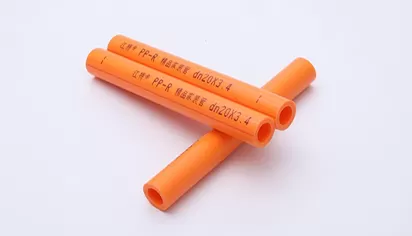
Heat-fusion connections are suitable only for polyethylene (PE) or PPR systems and should not be confused with PVC solvent welding.
In flexible systems such as agricultural irrigation or temporary site drainage, non-glued couplings can provide added convenience. Nevertheless, every connection must still satisfy the pressure ratings and soil-load requirements specified by local building codes.
Jiangte's PE and PPR piping systems are specifically designed for both mechanical and thermal joining methods, offering secure connections while supporting recyclability in line with EU environmental standards.
Several misconceptions about PVC installation can lead to costly failures if not addressed.
One common myth is that PVC pipes are designed as a simple “press-fit” system and do not require glue. This is incorrect—only specialized push-fit or gasketed PVC systems are intended for tool-free assembly. Standard drainage pipe must be properly solvent-welded.
Another myth claims that any household glue or epoxy can be used. In reality, PVC requires certified solvent cement specifically formulated to dissolve and fuse the pipe's surface structure.
Some installers believe that applying more glue will create a stronger joint. On the contrary, excessive cement can form internal ridges that cause turbulence, reduce flow efficiency, and weaken the weld.
Finally, many assume joints can be pressure-tested immediately after assembly. Most codes require a minimum curing period—often up to 24 hours—before testing at pressures above 0.2 MPa.
Understanding these realities helps installers achieve consistent, code-compliant results on every project.
To achieve dependable, long-lasting joints, follow these essential steps:
Begin with careful preparation by cutting the pipe squarely, removing all burrs, and performing a dry-fit to verify proper alignment. Next, thoroughly clean the surfaces and apply a compatible primer to remove any oils or contaminants. Apply the solvent cement evenly to both the pipe and fitting, ensuring full coverage without gaps or excess runs. Insert the pipe fully into the fitting with a slight twist and hold it securely for at least 30 seconds. Allow the joint to cure undisturbed according to the manufacturer's guidelines, keeping in mind that colder temperatures require longer curing times. Once cured, perform pressure testing gradually while checking for any signs of leaks or weeping. For larger projects, document the type and batch number of the cement used to maintain full quality traceability.
Using premium pipes and fittings from Jiangte, including their PVC-U, PPR, and stainless solutions, helps ensure material consistency and perfect solvent compatibility, which minimizes the risk of micro-leaks and reduces future maintenance costs.
In environmentally sensitive applications such as stormwater management or wastewater reuse systems, reliable joints are essential to prevent contamination. Properly solvent-welded PVC connections prevent groundwater infiltration and exfiltration, reduce the need for additional sealants or liners, and help meet strict regulations including the EU Urban Waste Water Treatment Directive (91/271/EEC) and the US EPA CFR Title 40.
PVC manufactured from 100% virgin material, as produced by Jiangte, maintains a uniform polymer structure that responds predictably to solvent welding. This consistency is vital for both environmental safety and successful regulatory compliance.
So, does PVC drain pipe need to be glued?
Yes. For any permanent, watertight installation—especially underground drainage—solvent welding is essential. It creates a seamless, leak-resistant joint that satisfies both pressure and environmental performance requirements.
Mechanical couplings and compression fittings serve a purpose, particularly when easy maintenance or disassembly is important. However, for long-term buried drainage systems, solvent welding continues to be the gold standard.
By selecting certified materials, following correct surface preparation procedures, and allowing sufficient curing time, installers can create durable connections that will perform reliably for decades.
For high-performance piping systems that combine reliability, safety, and sustainable manufacturing, consider Jiangte's comprehensive range of PVC, PE, and PPR solutions, trusted worldwide for quality and environmental compliance.